KBB: A Shared Language
Published in the January/February 2026 issue of Kitchen & Bath Business.
It should have been a momentous occasion when the client purchased his first home, but the dated and cookie-cutter nature of the builder-grade house dampened the euphoria. Designed and built in the aughts, the Scottsdale, Ariz., home possessed a very early 2000s interior that was emphasized by its Tuscan-inspired kitchen. Recognizing that this called for a serious renovation, he googled professionals and stumbled upon a celebrated luxury interior designer right in his backyard: Lauren Lerner, founder and principal designer of Living with Lolo.
Lessons in Wabi-Sabi
The Scottsdale designer has said the Tuscan style is common in her area and that she’s being asked to replace it for a lot of clients. Dark, off-the-shelf cabinetry, polished-granite countertops, beige walls and stone-emulating tile fl oors defi ned the space, a far cry from the client’s aesthetic preference of Japandi minimalism. But, with an HOA forbidding changes to the Mediterranean-style exterior, Lerner strove to marry these competing languages so it would feel like the same home inside and out. The happy medium they landed on was wabi-sabi, which Lerner says celebrates natural materials and organic shapes and creates an overwhelming sense of calm as well as a lived-in feel.
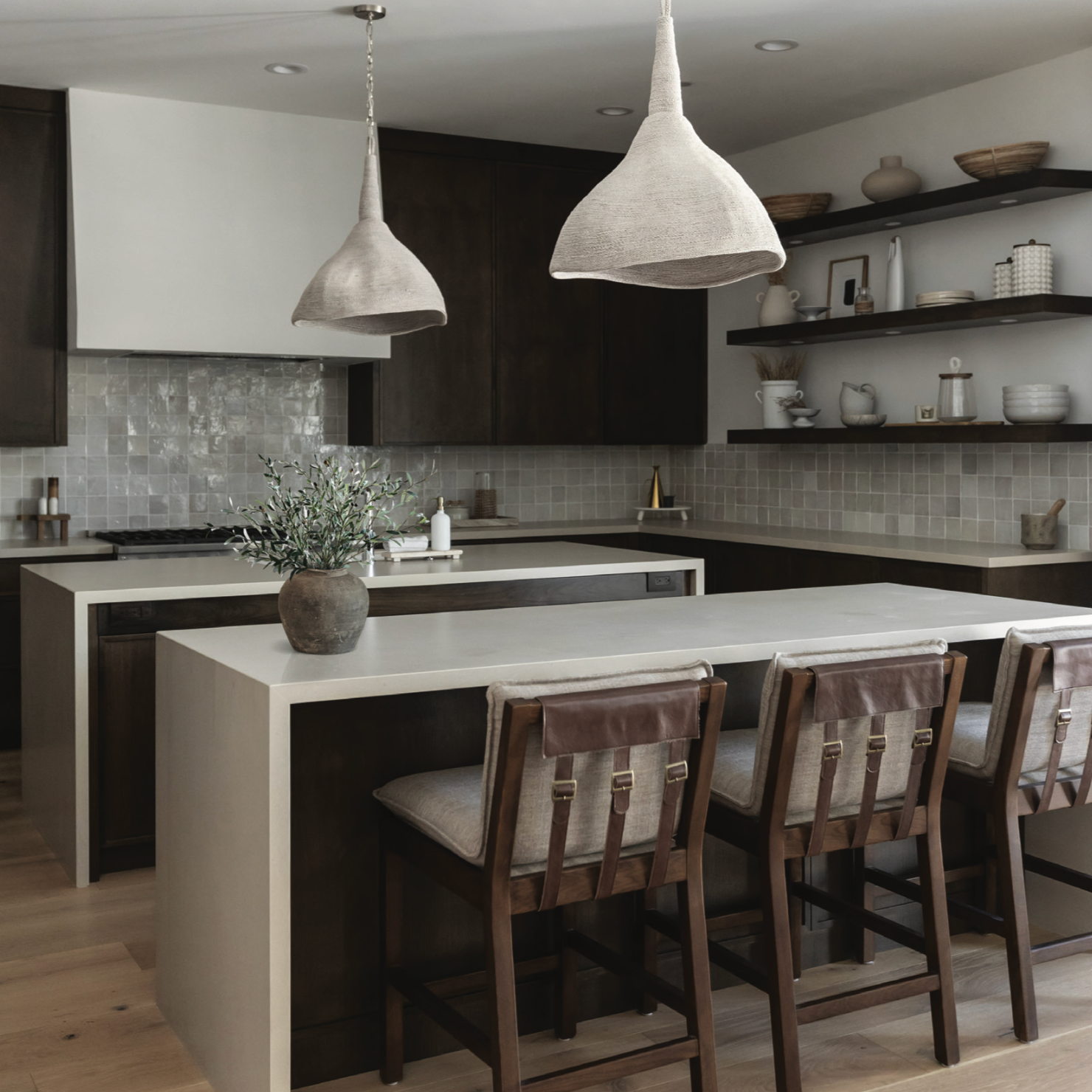
Staying within the existing kitchen’s footprint, her team demoed the old millwork and a window over the original sink, which was filled in to provide more usable space. Custom dark-stained oak cabinetry climbs up to the ceiling on two sides, creates one long work counter on the filled-in window side and forms two islands at the room’s center. Altogether, they increase storage by 30% and respond to one of the client’s asks: to keep small appliances hidden and off the counter. Swaths of basalt-cream Sapienstone, a nod to the desert city’s sand, form the countertops and lend to the calm wabi-sabi feel, while the material’s soft satin finish addresses a second client ask – to eliminate shiny finishes.Since this request extended to metallic surfaces and objects, the designer paneled all the appliances, save for the range and ovens, and utilized push-to-open hardware. (The only exceptions are the fridge and freezer units, which sport discrete, long and slim bar-style pulls stained to match the millwork.) The custom plaster hood over the range, ivory zellige tile backsplash and limewashed walls and ceiling stick to this directive while also leaning into the wabi-sabi principle of finding beauty in imperfection, cleverly announcing that nothing is cookie-cutter here.
Striking a Balance
The old kitchen had a single square island close to the cook wall, but it left the remaining space empty and looking lopsided. Lerner swapped it out for a pair of rectangular islands. Moving the sink from the perimeter to one of the islands enhanced flow and opened the opportunity to create the single uninterrupted worktop along the former sink wall.
Meanwhile, the second island provides a dedicated seating counter unimpacted by cooking prep work. A favorite of the designer’s, irregular woven-rope pendants dangle above each island. “They’re very organic shapes that fi t the wabi-sabi aesthetic,” said Lerner. “Custom and original pieces come with an extra-large price tag, but these fixtures still give that collected look while staying within our client’s budget.”
Rounding out the kitchen’s new-found palette are white oak floors; a warm welcome compared to the old dark stone-mimicking tiles. Quite pleased with the results of her work, which also included the living room and other non-private zones, the client had Lerner return to remodel the primary bathroom.
A Quiet Place
The house’s original Tuscan aesthetic was truly amped up in the old primary bath: The dated vanities, drop-in tub surround and walk-in shower all donned a mosaic border with a scroll design, for instance, and beige travertine-evoking tiles cladded the floors, some of the walls and an arched entrance to the shower. To stay within budget, the team kept all the plumbing in place but ripped out all the fixtures, finishes and shower enclosure to start anew.
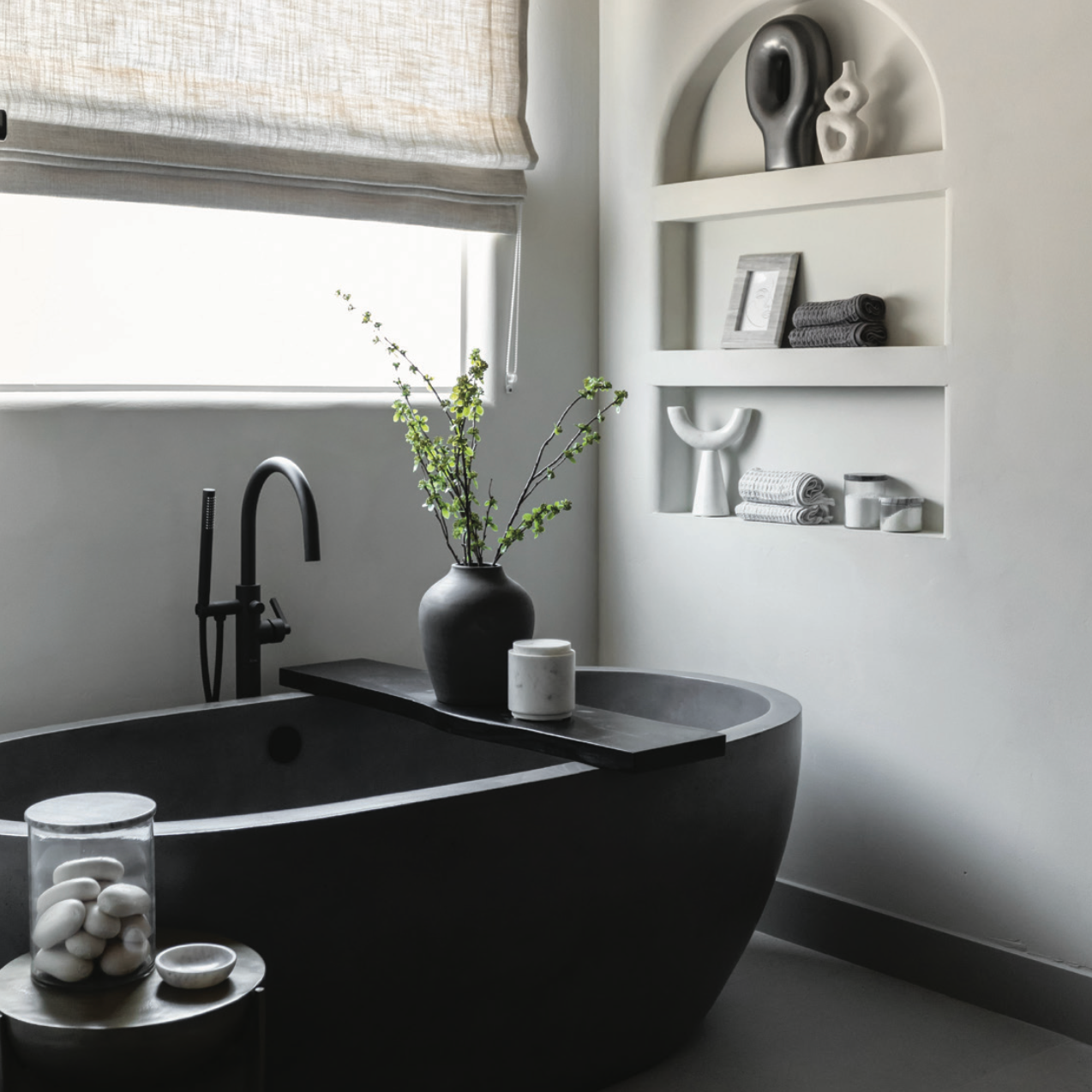
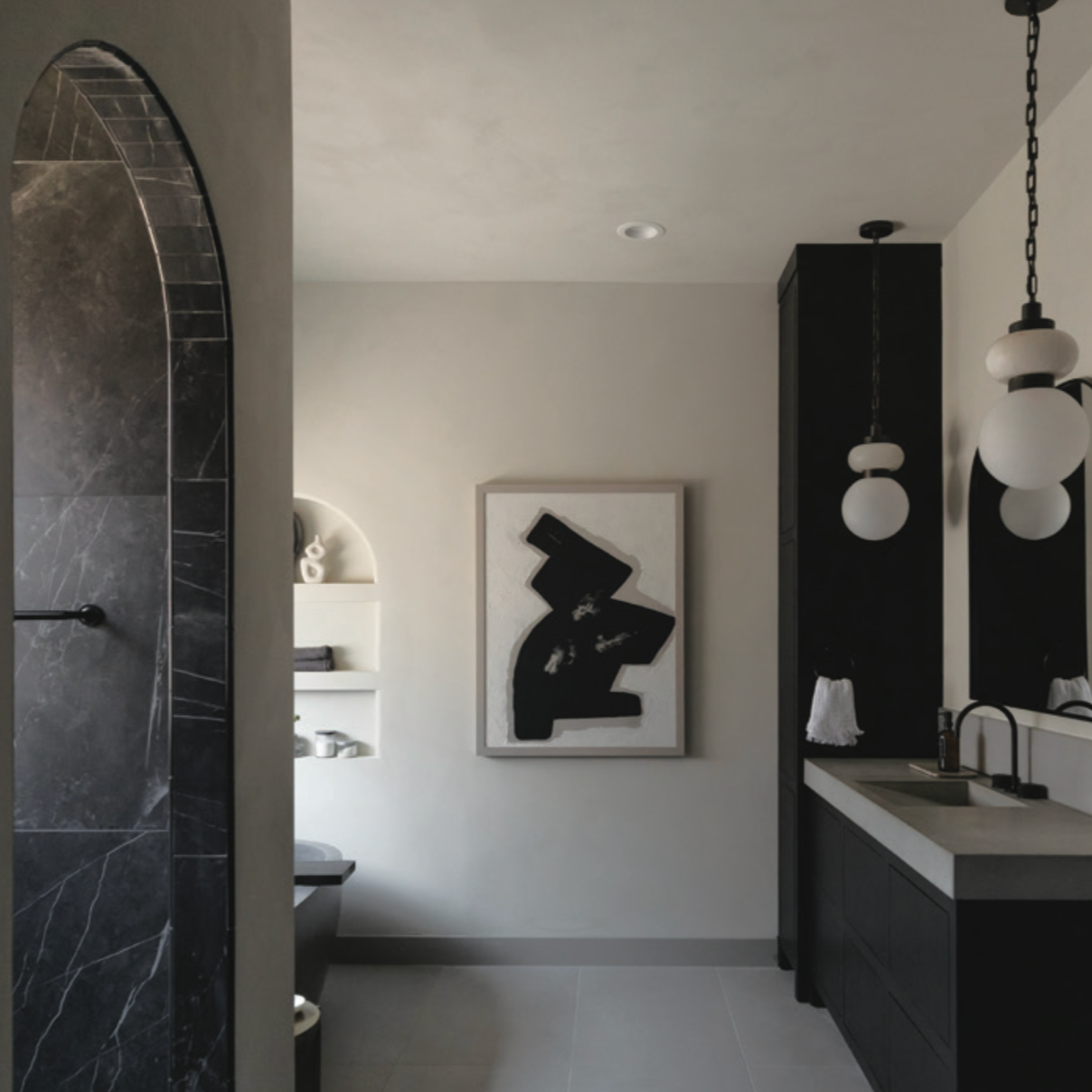
The revamped bath echoes the calming wabi-sabi character of the kitchen through limewashed walls outside of the shower, dark-stained oak vanities, clean lines and lack of sheen. As the client is enamored by the look of integrated elements, Lerner designed single-piece countertops with integrated sloping sinks for the vanities. Concrete is also picked up by a new freestanding tub in one corner of the bath and gray porcelain tile flooring throughout.
The design team recreated the old shower archway, alluding to the house’s original Mediterranean vibe, and clad its soffit with black marble-simulating porcelain tiles, which continue onto the shower walls. Arches repeat in the vanity mirrors, faucets, new shower enclosure window and integrated shelving niche at the tub, but beyond referencing Mediterranean architecture, they serve another purpose. Knowing that one day the client will introduce a significant other, Lerner made sure to add softer elements into the primary bath so it wouldn’t read too masculine. All the arches, limewashed walls, ovoid tub and rounded alabaster pendants above the vanities contribute to this effort.
According to the designer, the client hasn’t singled out one favorite element of his new bath, but he emphatically approves of the overall uniqueness of the wabi-sabi aesthetic here and throughout. Finally, his first house feels like home.